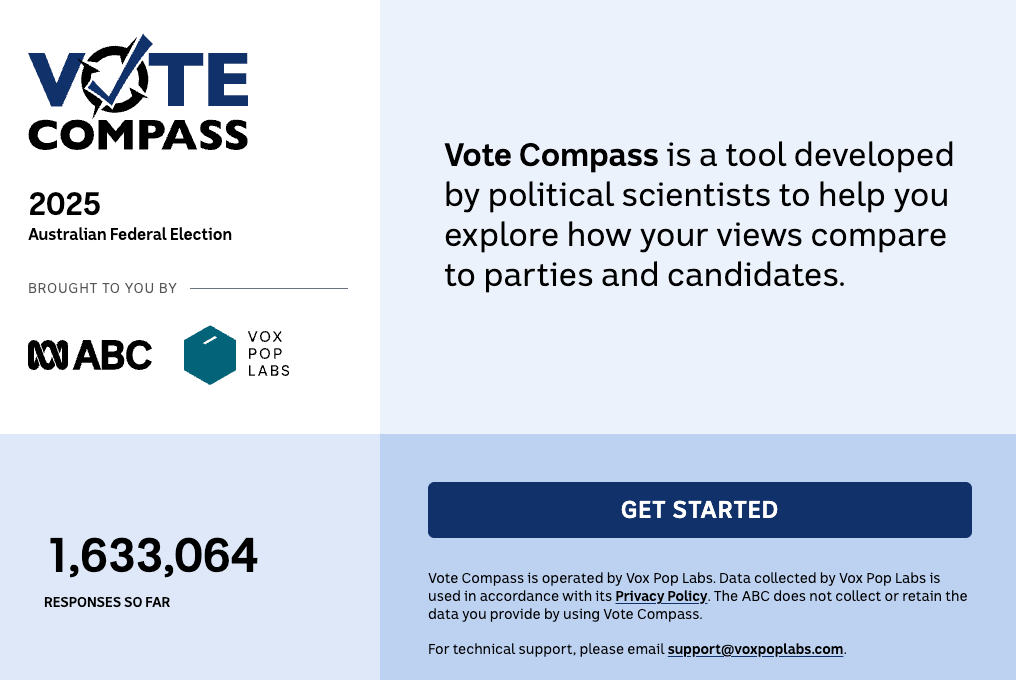
Most Australians must vote and it's essential everyone has access to information so they can place an informed vote on election day. The Australian Broadcasting Corporation (ABC) commissioned Vox Pop Labs (VPL) to build an interactive web application called Vote Compass to show Australians how they align with parties and candidates ahead of the 2025 Federal Election.
Accessibility was a key Requirement.
Design
VPL shared their user interface (UI) designs with Gerry.
Although accessibility was an early requirement the designs showed instances of insufficient colour contrast, some reliance on colour perception in complex graphs and charts, and unclear keyboard focus visibility. However these issues were resolved early and didn’t slow down production.
Single Page Applications load faster because only a single page is served with dynamic exchanges to body content, and VPL were keen to use this implementation.
Accessibility Requirements
Gerry detailed Accessibility Requirements to accompany final UI designs when handed over to the development team. They included:
- Content structure: the order that components are navigated through the page
- Keyboard interaction: the order that controls should be reached and actioned with a keyboard
- Screen reader guidance: the information provided to assistive technology users on element name (what it is), role (how it works), and value (state), and suggestions to achieve them.
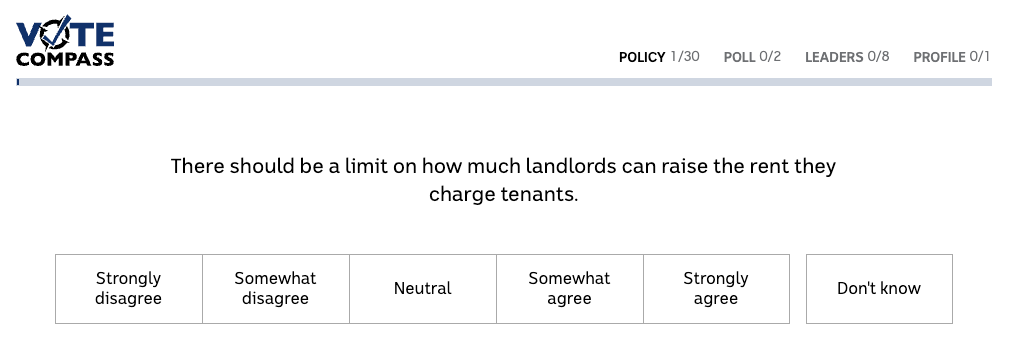
He added special notes for Single Page App accessibility. Given the page doesn’t reload, focus had to be carefully managed. For example, a new question replaces the previous question when answered. Focus had to be managed to this question for a seamless keyboard and screen reader experience.
Development
VPL built the web application from final designs and accessibility requirements. Gerry provided ongoing support to the development team to ensure accessibility requirements were met and to troubleshoot any issues that arose during development.
Testing
Gerry tested the web application with an array of methods and tools used by diverse audiences. Thanks to a shift-left approach to the build it was mostly accessible. Exceptions included some instances of focus management and screen reader labelling that were quickly resolved ahead of acceptance.
Outcome
The Vote Compass web application was successfully delivered and met all accessibility requirements. It provided Australians with an easy, intuitive way to find the information they needed and discover new content, ensuring that everyone could participate in the democratic process.